

Blogs

Telehealth Awareness Week Thought Leadership Interview
October 3, 2022
Noel Khirsukhani speaks to the American Telehealth Association for Telehealth Awareness week.

Happy National Doctors' Day!
March 30, 2022
A message of thanks, admiration, and inspiration from Joshua Briscoe, MD, to his physician and clinician colleagues for National Doctors' Day.
For At-Risk Patients
February 24, 2022
Anywhere the struggle is great, the level of ingenuity and inventiveness is high.
- Eleni Zaude Gabre-Madhin
This sentiment has been made salient by the pervasive reality of the COVID-19 pandemic. Yes, most of us, especially in the medical field, have faced unimaginable difficulties; but we’ve also experienced the other side of the spectrum. We’ve had the opportunity to witness how these difficulties have brought out the best in people; including the ingenuity to solve some of healthcare’s most persistent problems.
Technologies like virtual care have gone from obscure to ubiquitous, becoming an essential component of a sustainable, long-term healthcare strategy for health systems. The adoption of new applications of virtual care, like Telesitting, are opening new doors, allowing for improved quality care delivery and the preservation of health system resources.
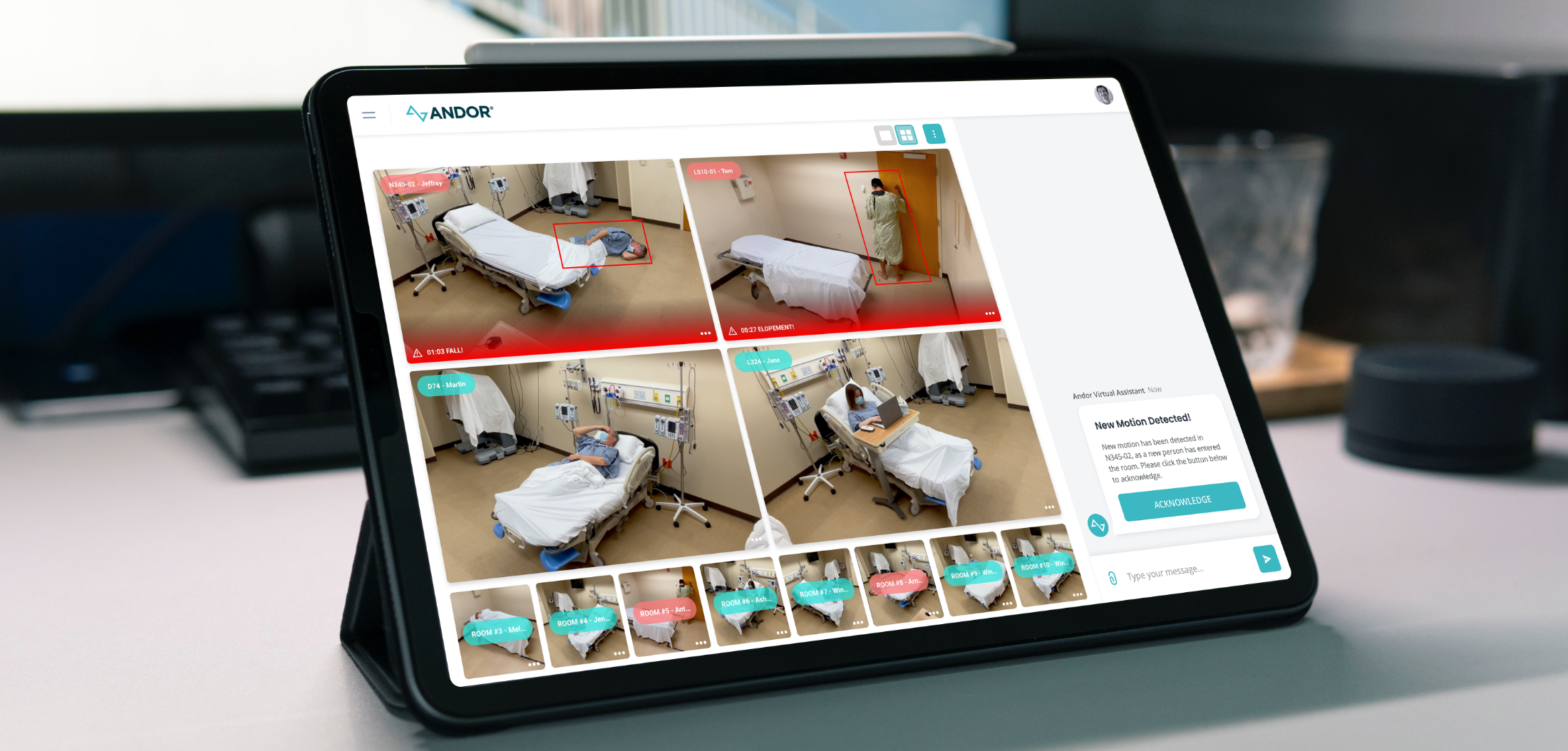
As skilled nursing facilities, rehab facilities, hospitals and health systems find themselves struggling to balance staffing challenges with increased patient needs, Telesitting is being adopted as a first line of defense for monitoring at-risk patients. Traditionally, patients at-risk of falling, harm, elopement, etc., have required 1:1 full-time monitoring, straining already thinly stretched clinical resources.
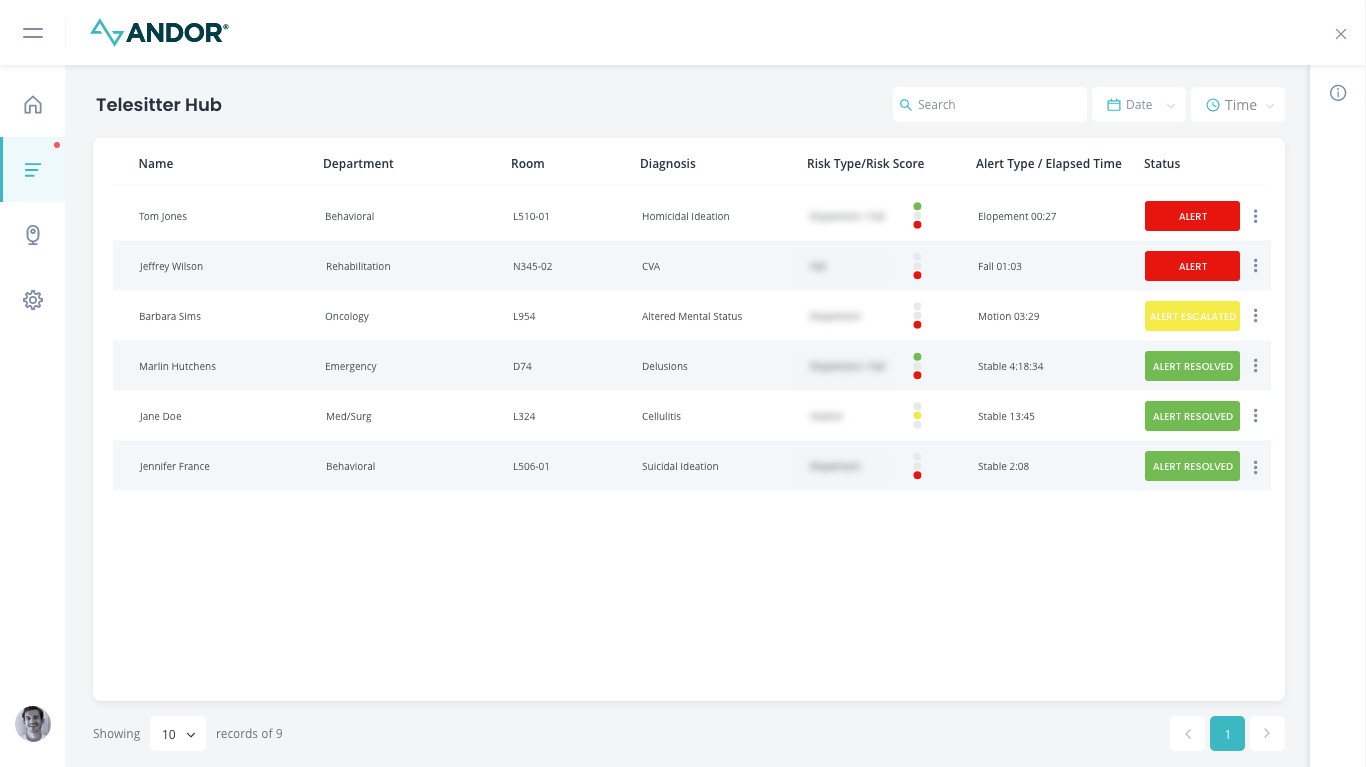
With AI-enabled Telesitting from ThinkAndor®, patients are monitored virtually on a 1:many platform. Utilizing video, microphone and in-room devices and sensors, one clinician is able to effectively monitor multiple patients virtually and be immediately alerted to patient movement, fall or other adverse event that requires intervention. Here are a few real-world examples of the technology at-work.
- A patient requiring monitoring, who is at-risk for fall, positions themselves to sit up in their bed. The AI-powered Telesitting technology immediately recognizes this movement and alerts the clinician that the patient may be trying to get out of bed and directs an intervention.
- Patients who are known for violent or aggressive behavior, at-risk of hurting themselves/others, or elopement have been traditionally monitored on a 1:1 basis. With Telesitting, one staff member is empowered to monitor multiple patients safely and effectively, or act as a compliment to an in-person sitter. In this instance, the AI-technology would alert the “telesitter” if the patient moves towards the door or takes an action that could be recognized as a precursor to self-harm.
Of course, Telesitting is not appropriate for all at-risk patients, but with ThinkAndor’s embedded risk assessment tools for multiple risk types, staff can effectively determine safe candidates; resulting in preserved resources, an empowered staff, and better outcomes for patients.
The transformation of healthcare is upon us. I’m grateful that the ingenuity that drives innovative sustainable healthcare solutions is thriving and is empowering all healthcare personnel to consistently deliver better care for our patients.
Virtual Rounding: Telehealth for Emergency Departments
September 23, 2021
Telehealth has indeed come of age with the COVID-19 pandemic, propelling the evolution of new agile innovations to solve emerging problems. Virtual rounding is one such example. It’s not the first thing that comes to mind when telehealth is mentioned in the traditional sense, but it is the form of telehealth that I rely on daily to efficiently provide high quality care in an emergency department that rarely has relief from overcrowding.
Overcrowding in the ED has become a pervasive problem across the country as hospitals continue to struggle with resources and clinical staff burnout resulting from COVID-19 surges. Virtual rounding is a solution that has allowed our hospital to mitigate these challenges by allowing clinicians to virtually assess patients while they wait in the ED – and here’s the kicker – we do it without disrupting the clinician’s workflow or requiring the in-person staff to take on additional work.
Seamless integration may be the buzzword du jour, but it’s the fait accompli of virtual rounding. Providers can continue working clinically during a time of decreased hours and contribute to patient care, outcomes, and safety while adding to overall productivity. Here’s an example from our ED of how virtual rounding is streamlining workflow, improving outcomes, while combatting wait time frustration and improving the overall patient experience.
While a medic rounds to repeat vitals, a virtual session is launched with a clinician (in this case an advanced practice provider or senior level resident). This allows for adding labs to existing specimens that were pulled for protocol orders or adding advanced radiology studies to be completed, which means faster disposition times. This also leads to patients feeling like someone is actively watching out for them, allows them to ask questions regarding results and empowers communication with a discussion of the importance of a treatment plan or admission and an in-person evaluation.
And here are the results that I have experienced with ThinkAndor Virtual Rounding:
- A 49% decrease in rates of patients “leaving without being seen.”
- Of those patients seen by the virtual provider, this reduction jumps to 92% (includes elopements and those leaving against medical advice).
- 20% of patients are being identified for immediate discharge and 3 patients per 8 hour shift are being identified as needing expedited care.
- We have caught early sepsis, called a stroke alert, and identified a GI bleed ultimately requiring blood transfusion – all by virtual assessment.
More than the improvement to patient flow and data on throughput; for clinicians, improving patient care is the real ROI. This is what I have experienced with virtual rounding and why I will continue to rely on it to add value as we push through these unprecedented times in emergency departments and across many other areas of care.

Virtual Care/Digital Health - Beyond COVID Response
August 10, 2021
In my conversations with healthcare leaders across the US, I keep hearing about two common themes:
1) fragmentation of the Virtual Care Solution industry and
2) shortcomings of the virtual patient/provider experience.
These areas of concern have emerged from the inertia of embracing virtual care amid pandemic-driven necessity. And now, moving forward, we can take the opportunity to learn from that experience and reimagine how to design and deliver care to enable and enhance the patient-provider experience.
Skyrocketing use and retrenchment
Let’s first talk a bit about the feedback I am hearing from our healthcare colleagues and clients regarding the current virtual care/digital health experience. Then we’ll move our focus to what the opportunities could be if we reimagine this for the future.
The healthcare industry has demonstrated that it could be nimble and innovative in response to the pandemic. Now organizations need to secure and translate the gains and momentum in virtual care over the long term. Many organizations talk about the need to re-evaluate their virtual strategy to think about what the right target should be. In my opinion, our focus should not be a target percentage, but rather on what is the right way to engage patients/providers in virtual health. And this should be based on the entire care journey, taking into account different services and the stage of the care experience, to be able to execute on a value-added balance of virtual/digital health and in-clinic face-to-face visits.
I believe it’s not a matter of one OR the other, but rather one AND the other in context of the care journey. Finding that ideal balance or mix requires first understanding the different use cases based on the types of services patients/providers are using and then making strategic decisions for what the experience could optimally be at different points of care. This approach calls for an experience view vs an episodic view of the services and moving beyond the core EHR and virtual care plug in capabilities that many executed on quickly under the practical constraints and time pressures of the pandemic.
Building on our decisions for strategy and approach we must re-evaluate technology and third-party vendors. Amid pandemic pressures to quickly establish virtual capabilities, many healthcare delivery systems did not have a chance to evaluate the best partners to execute their virtual/digital health experience at an enterprise scale. Many of them utilized existing resources, leveraging current EHR vendors and infrastructure, simply adding a virtual plug-in vendor to get up and running in response to pandemic needs.
This patchwork approach to the execution of services is suboptimal for moving forward to mature and expand our delivery models into the future. We should seek to establish partnerships with vendors and enterprise solutions that enable patient and provider conversations at all points of the care journey. The industry is currently fragmented with niche solutions for inpatient acute needs, ambulatory needs, and specialties. The net result of this can be fragmented interactions with little interoperability between systems across the care experience which does not lay a foundation for humanizing healthcare.
I had a less-than-positive virtual care experience recently that is likely similar to what others are experiencing and, unfortunately, not at all unique. My primary care provider recommended a specialist in my community. I agreed to a virtual care visit because the wait time to see her was shorter if I agreed to a virtual visit vs. an in-clinic face-to-face visit.
When I made my appointment, the system initiated two emails. The first message directed me into a very lengthy account set-up process for their niche patient portal which has no interoperability with my Epic MyChart portal I am used to interacting with. The second email contained my Microsoft Teams meeting video plug in link.
My appointment was still a six-week wait so I had to remember where those emails were and be able to call them up closer to my appointment time to be able to execute the virtual visit in the way they had instructed. The Teams meeting link was only sent out once. On the other hand, I kept receiving email reminders to fill out the intake forms or my virtual visit would be canceled -- even though I had already taken 30 minutes to provide thorough answers on the intake form.
Fast forward to the day of my visit… I launched the Teams video visit 15 minutes prior to my appointment time as the instructions requested. While awaiting the video visit, there was nothing prompting me that the provider would be their shortly or any sort of message. While I was waiting on the Teams video visit, I got a call on my cell phone. The first time, I did not answer because I was on the video visit appointment. When the same number called back, I answered. It was the provider office calling to get me “ready for the visit”. I told her I was on the video visit as their instructions requested. She responded, “Oh…I just needed to see if you filled out your questionnaires but now, I see in the system you have… so I don’t need to talk to you… I will tell the provider you are on the virtual visit, and she will join shortly.”
Now, how fragmented of an experience was this even for someone who is comfortable with, and loves, technology? Quite honestly, if this provider had not come so highly recommended, I likely would have already canceled my appointment based on the experience I was having leading up to the visit.
In the balance, I will say that once I got on the virtual visit with the provider, it was the best visit I have ever had with a specialist. She was prepared, had reviewed my intake, and partnered with me on a plan for next steps. The provider and the patient (me) were able to have a successfully positive and meaningful interaction despite the people, processes, and technology barriers.
Hope for the future if we act and innovate
This must change. We must apply the same attention to operational workflows, enlisting the whole care team, and implement technology that enables the continuum of the experience from setting the appointment to post-visit follow-up. No other industry would put up with this inefficiency and lack of optimal virtual workflows.
Technologies must fully support, honor and enable the way patients and providers experience healthcare, and there are very few that do today. We need to create platforms that work for patients and providers — not the other way around.
Andor is a great example of a company developing technology to support the way healthcare works. With ThinkAndor®, healthcare institutions can optimize virtual health experiences which are integrated with the core EMR and clinical workflow. This integration allows for an orchestrated approach to virtual health, allowing healthcare institutions to configure clinical and operational workflows in a unified dashboard experience for providers, while enabling a simple but tailored journey for every patient — no matter how tech-savvy.
The ability to curate digital experiences for patients while simultaneously instrumenting clinical and care team dashboards enables flexibility and sustainability for health systems. The platform enables organizations to extend and unify several core platform capabilities in one enterprise virtual experience — Virtual Health Enablement, Secure Clinical Collaboration, Community Collaboration, Virtual Inpatient Rounding and Virtual Patient Monitoring.
We need technology solutions that take an enterprise-wide approach to facilitate healthcare work, open up access, and enhance reach. Let’s move forward in a spirit of cooperation as we leverage what we’ve been learning to improve the future of healthcare for all.
Originally posted by Tegria.

Dr. Briscoe receives Teacher of the Year designation
June 25, 2021
Our Dr. Briscoe reflects on his recent honor of receiving The John F. O’Brien, MD Teacher of the Year designation from Orlando Health.
The truth is - this job is tough. Sometimes I’m exhausted from a busy day, leading into an overnight shift, and can’t find the time to complete charts; yet somehow, I always feel this desire and need to teach – at least something. Teaching is often what keeps me fresh and motivated. I’m surrounded by incredibly intelligent individuals that quite frankly enlighten me every single shift I work, so I strive to remain innovative in my teaching style.
The most valuable teaching in emergency medicine is imparted on the job; it often happens with a conversation about a disease process and the ‘what ifs’ of a case. Teaching happens with a discussion about a medication side effect or the potential complications of a procedure and how to manage it. Learning opportunities away from the bedside are equally important. To successfully navigate medicine, residents must have an integrated understanding of healthcare that includes insights into the business and technology that directly impacts how they deliver care.
It’s imperative residents understand how the EHR and the growth of health data affects our practice and workflows, and how smart solutions can reduce readmissions and ensure our patients have adequate follow-up. Young emergency medicine physicians and students need to be versed in how the practice is evolving into a more innovative specialty propelled by innovations like telehealth that can virtually triage patients to the appropriate level of care and help with patient flow in a crowded waiting room. Ultimately, they should have a foundational understanding of how quality care has evolved from a clinical and technological perspective so they can play a role in its continued evolution.
Amidst a busy day, sharing my knowledge and experience with the next generation of physicians is what keeps me invigorated. It’s what keeps me hungry and passionate about innovation and the transformation of healthcare – and why being recognized by the residents I teach is especially sweet.